
The story
Japan’s tax-free shopping will change according to when you buy, not when you leave. Sales made through 31 October 2026 fall under the current system; sales made from 1 November 2026 will use the Refund Method. If your trip crosses that date, your purchases will fall under different rules. The National Tax Agency’s detailed Q&A confirms there will be no ordinary overlap period.
For purchases from 1 November, eligible shoppers will pay the tax-inclusive price first. The equivalent consumption tax will be refunded after customs confirms export. You should budget for that upfront payment; the change will not provide a guaranteed instant refund or universal 10% cash-back payment.
Buy before November or accept the extra steps?
Pre-November purchases may be simpler at checkout under the current system. Purchases from 1 November will lose the separate general-goods and consumables categories, the JPY 500,000 consumables ceiling and special packaging requirement. The minimum will remain JPY 5,000 excluding tax per store per day, according to the official overview.
That will make the new rules less restrictive in some respects, but you will need enough money for the tax-inclusive purchase and a plan for departure checks. Before buying, ask the shop how it will arrange your refund. Methods will vary by shop or provider: the traveler FAQ lists bank transfer, card transfer, app-based refund and cash at the departure port. It does not establish one universal processing time, so do not rely on receiving the money before boarding.
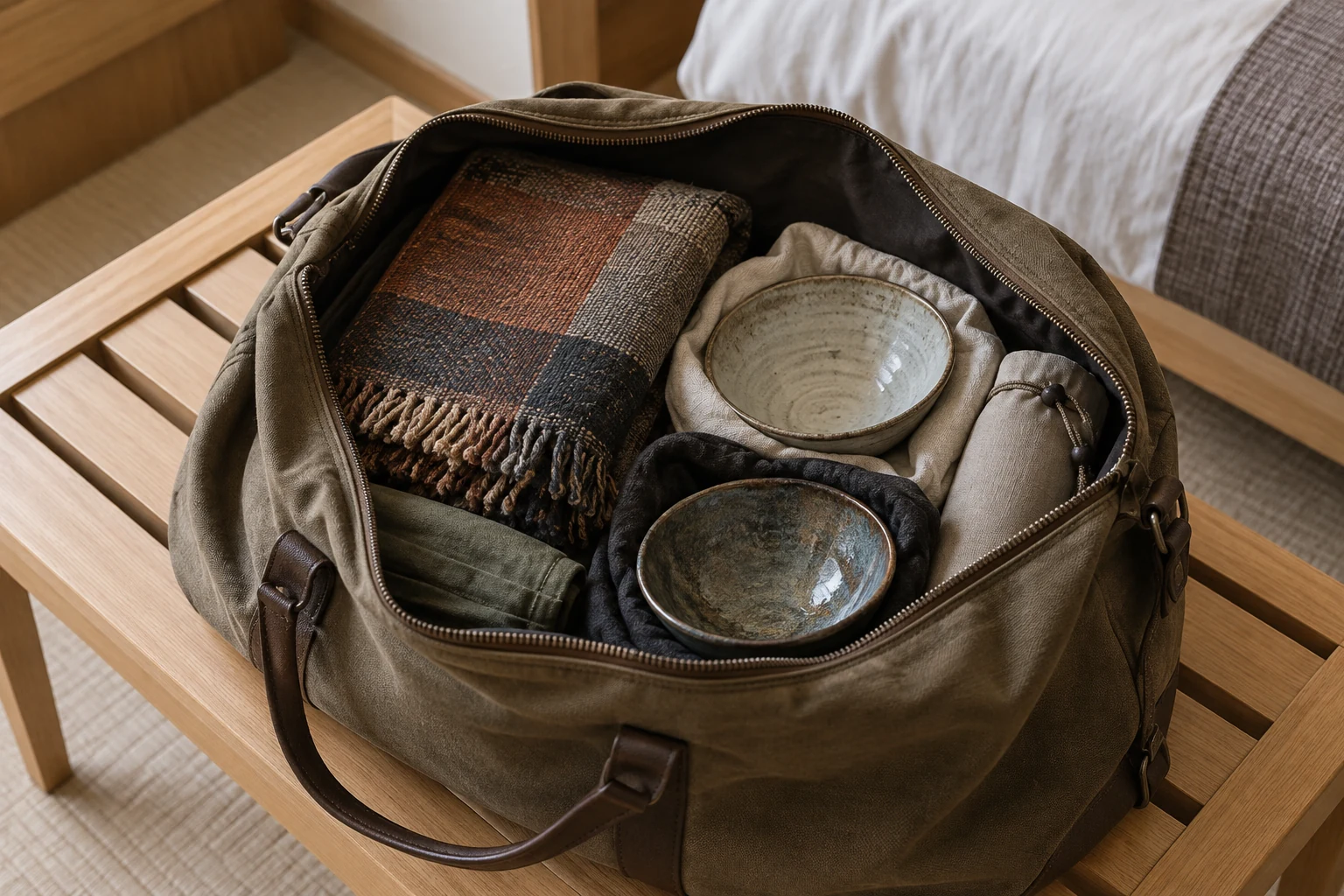
AI-generated conceptual illustration: purchases packed together for departure; not a reported scene.
Keep every receipt’s goods available before check-in
For purchases under the new system, customs confirmation will need to happen within 90 days of purchase and before airline baggage check-in. The official example gives a 1 November 2026 purchase a confirmation deadline of 30 January 2027. You will need all the purchased goods available; checked luggage will not be retrievable for a later inspection. See the Japan Tourism Agency’s refund guidance.
Confirmation will operate at transaction or receipt level. If one item is missing, every tax-free item on that receipt will risk losing confirmation. Keep purchases grouped by receipt when packing, and complete the procedure before handing over your bag.
Food, drinks, cosmetics and other goods consumed in Japan will not qualify for the refund. Removing special packaging will not make local consumption eligible. If you consume goods, you will need to report them to customs rather than attempt the terminal procedure. Do not assume the remaining items on the same receipt will retain their refund eligibility.
Check eligibility and how the goods will leave Japan
Eligibility depends on your passport, residence status and purpose of travel. The official purchaser guidance lists foreign non-residents in categories including Temporary Visitor, Diplomat and Official, with required passport or landing-permission documentation. Foreign nationality alone does not establish eligibility.
For the new system, plan to carry your purchases out personally unless the shop confirms an approved shop-direct shipping arrangement. Personal overseas shipment by mail or parcel was abolished on 31 March 2025. Bullion, coins and goods exempt from consumption tax will be excluded. If customs-confirmed goods are not exported without delay, collection of the equivalent tax and penalties may follow, as the official guidance explains.
Checked: 15 October 2026.