The story
Traveler Intelligence · Singapore · Verified 19 September 2026
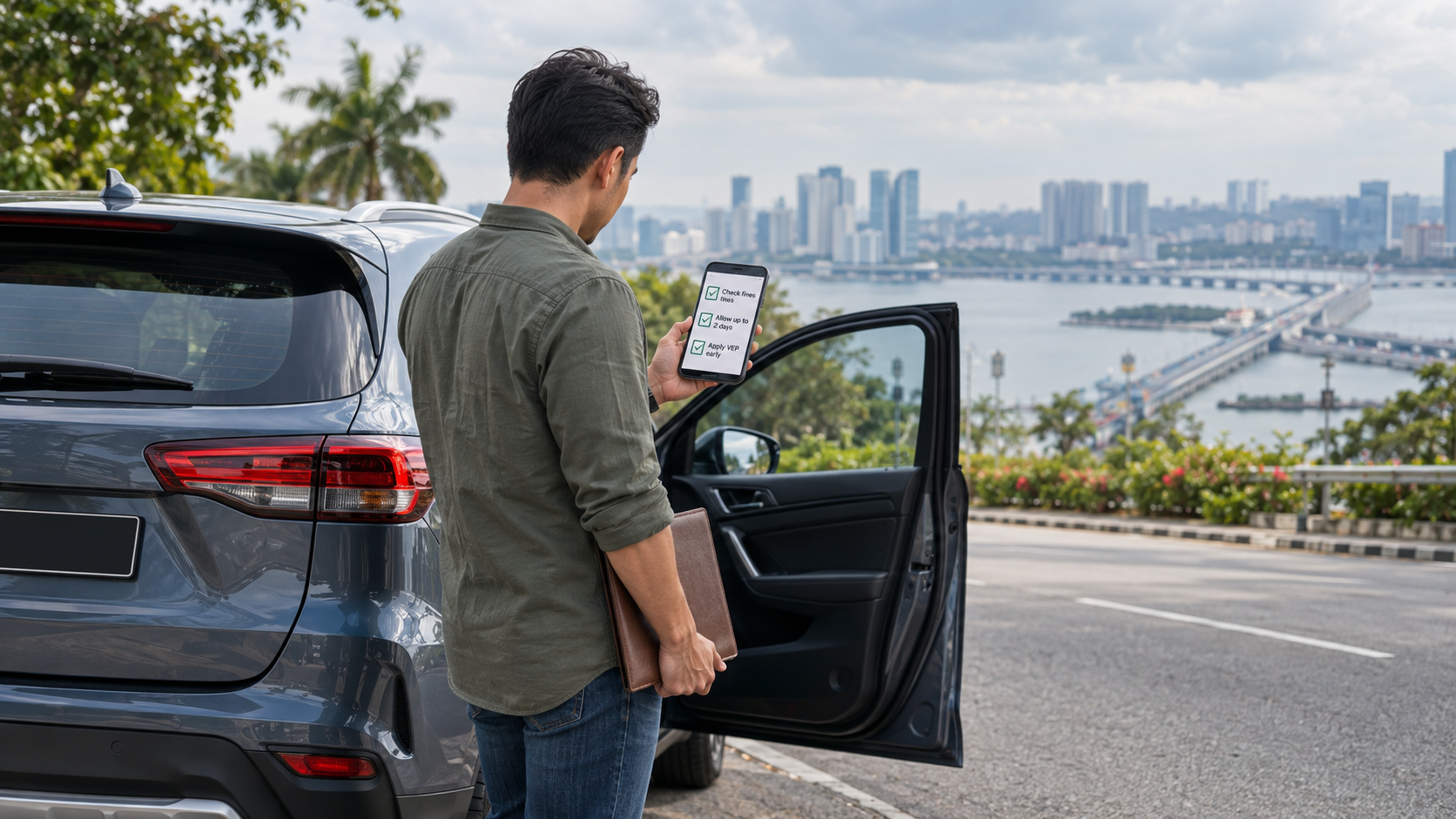
Singapore is scheduled to move an important check earlier in the cross-border driving process. From 2 November 2026, a foreign-registered vehicle with an outstanding Singapore fine for a traffic, parking or vehicular-emissions offence will not be able to apply for or renew its Vehicle Entry Permit (VEP).
That does not change ordinary air, rail, bus or pedestrian entry. It matters to the person whose trip depends on bringing a foreign-registered vehicle through a land checkpoint, and it is different from the current possibility of being turned back when the vehicle arrives without the required documents.
What changes on 2 November
The Land Transport Authority (LTA) and Ministry of Home Affairs say the new rule will apply to outstanding fines linked to offences committed in Singapore. Until the change takes effect, a foreign-registered vehicle with fines may be denied entry when it reaches a land checkpoint. From 2 November, the fine becomes a problem at the VEP application or renewal stage as well.
The LTA’s VEP definition covers more than a private car: its footnote refers to permits for cars and motorcycles, ASEAN public-service vehicles such as taxis and buses, ASEAN goods vehicles, and certain Autopass applications. The exact permit and document path depends on the vehicle and its registration country, so a driver should not assume that a private-car checklist answers every commercial-vehicle question.
The rule is future-dated. It is not evidence that every application is already being refused, and the authorities have not published a post-implementation failure rate or a grace period for a disputed fine. The safe reading is narrower: clear the relevant fine and allow the record to update before submitting the VEP paperwork.
The four-step preparation that matters
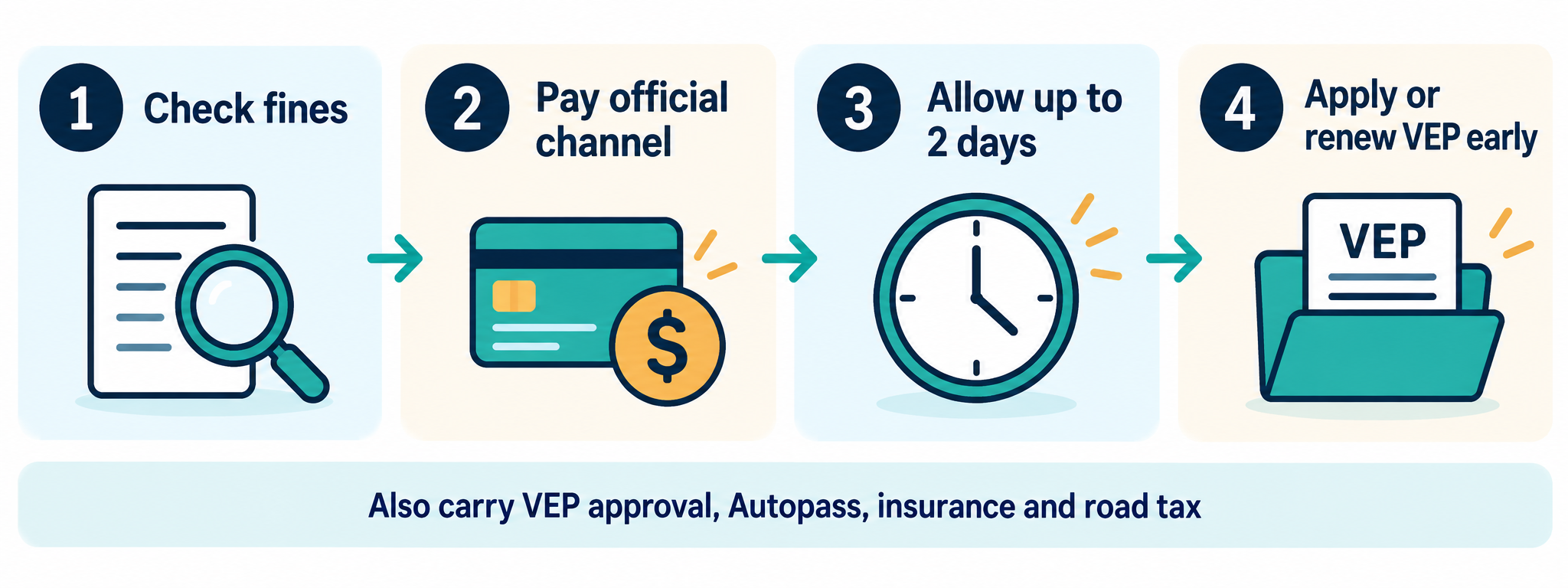
First, check for outstanding offences through the official route. The joint LTA–MHA release points foreign motorists to AXS, while the Immigration and Checkpoints Authority (ICA) lists payment through AXS, the relevant agency’s website or customer-service counter. ICA names the Singapore Police Force Traffic Police, Housing and Development Board, LTA, National Environment Agency and Urban Redevelopment Authority among the agencies that may need to clarify an offence.
Second, settle the fine through an available official channel and keep the payment record. A payment receipt is useful evidence for your own file, but it is not a promise that the VEP system will recognise the payment immediately.
Third, leave time for the systems to catch up. LTA says payment service providers may take up to two calendar days to process a payment and update agency records. That is why a same-day payment before a planned crossing is a weak travel plan, even if the amount has left your account.
Fourth, apply for or renew the VEP at least two weeks before the intended entry date. For Malaysia-registered cars and motorcycles, OneMotoring also lists the documents that must be valid before entry: the Autopass card, insurance, road tax, LTA’s VEP approval email and proper front and rear licence plates. Drivers may be asked to present the vehicle registration, insurance and road-tax documents as well.
Fine clearance is not a fast-lane promise
Clearing a fine solves one eligibility problem; it does not reserve a quick crossing. ICA is separately warning motorists about works and traffic at Woodlands and Tuas. A valid VEP, Autopass card, approval email and insurance are document conditions, not a forecast of queue length.
The same distinction matters if a vehicle is not ready. OneMotoring advises travellers without the required vehicle approval to consider authorised cross-border buses, taxis or trains. That is a practical fallback for an urgent trip, not an assurance that every alternative will have space at the preferred time.
The most useful pre-trip question is therefore specific: has this vehicle’s Singapore fine record cleared, and can the driver show the VEP, Autopass, insurance and road-tax documents before the planned crossing? If the answer is uncertain, switch the mode or move the trip early enough to resolve the record. Waiting at the checkpoint to find out is the least forgiving option.
Sources and evidence status
> Independent editorial coverage. No affiliate links, paid placement or commercial partnership.
>
> This is not immigration or legal advice: check the relevant Singapore authority before relying on a permit or payment status for a specific vehicle.