
The story
South Korea recorded 15,048,435 inbound visitors from January through August 2026, alongside higher tourism-related card spending and a larger share of arrivals through regional gateways. Those totals show growth, but they do not tell an individual traveler how easy or affordable a trip will feel.
Last verified: 30 September 2026 · News · South Korea
South Korea's Ministry of Culture, Sports and Tourism reported 15,048,435 inbound visitors in January–August 2026, up 21.6% from the same period a year earlier. August alone brought 2,245,293, up 23.3% year on year. The ministry's 28 September release presents these as tourism statistics; the Korea Tourism Organization's methodology note explains that the series is processed from immigration data and excludes specified residence-status categories. It should not be read as a count of every foreign border entry.
More arrivals, but what else changed?
The same release puts tourism-related card spending at KRW 14.018 trillion, a 48.5% increase, and says 27.8% of inbound visitors entered through regional airports and seaports. The entry share is a useful signal that international access extends beyond the main gateway. It does not establish where those visitors slept, how long they stayed outside the capital region, or how spending was distributed.
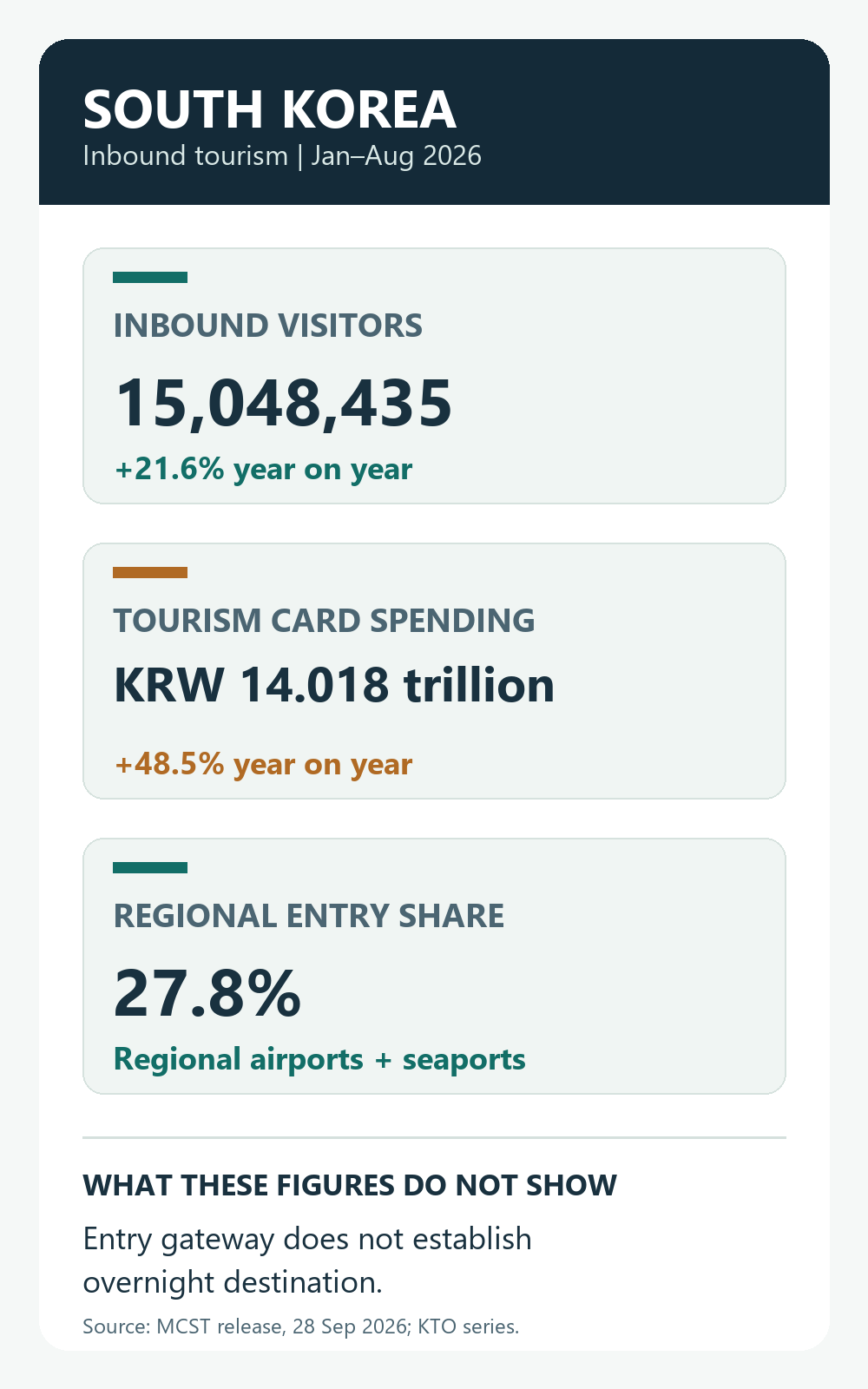
Nor can the spending total show what one traveler paid for a hotel, meal or journey. The research does not break out how much of its increase came from visitor volume, prices, exchange rates, card coverage or a different spending mix. A record for the sector can coexist with very different individual budgets and itineraries.
Access is changing for some travelers
The tourism ministry cites entry easing, airline cooperation and marketing among the factors associated with growth. The release does not isolate how much each contributed. Two separate Ministry of Justice notices show what some access changes actually cover.
An Indonesian group visa-free pilot is scheduled through 31 December 2026. It applies to groups of at least three assembled by a designated Indonesian travel agency, with travel throughout South Korea for up to 15 days. It is a conditional group arrangement, not a blanket rule for every Indonesian visitor. Smart Entry Gate eligibility has expanded to 42 countries and regions, with facilities added at Incheon and Jeju. Eligibility still needs to be checked for the traveler and route in question. The justice ministry's older peak-time illustration and selected testimonials are not a representative measure of 2026 queue times.
What the record cannot answer
The figures do not demonstrate shorter queues, better value, less crowding or higher visitor satisfaction. A regional arrival can still be followed by a stay elsewhere. For trip planning, treat the record as context for demand and entry routes, then check the current official rules for your passport and itinerary and make bookings on their own terms.
Sources and scope
The English ministry release, its Korean release, the KTO methodology note, and the two Ministry of Justice notices linked above were checked in the supplied research on 30 September 2026. The official statistics establish aggregate change, not an individual arrival experience or a causal explanation of growth.
Independent editorial coverage. No affiliate links, paid placement or commercial partnership.
This is not immigration or legal advice: use official South Korea guidance for the passport and purpose of travel in question.