The story
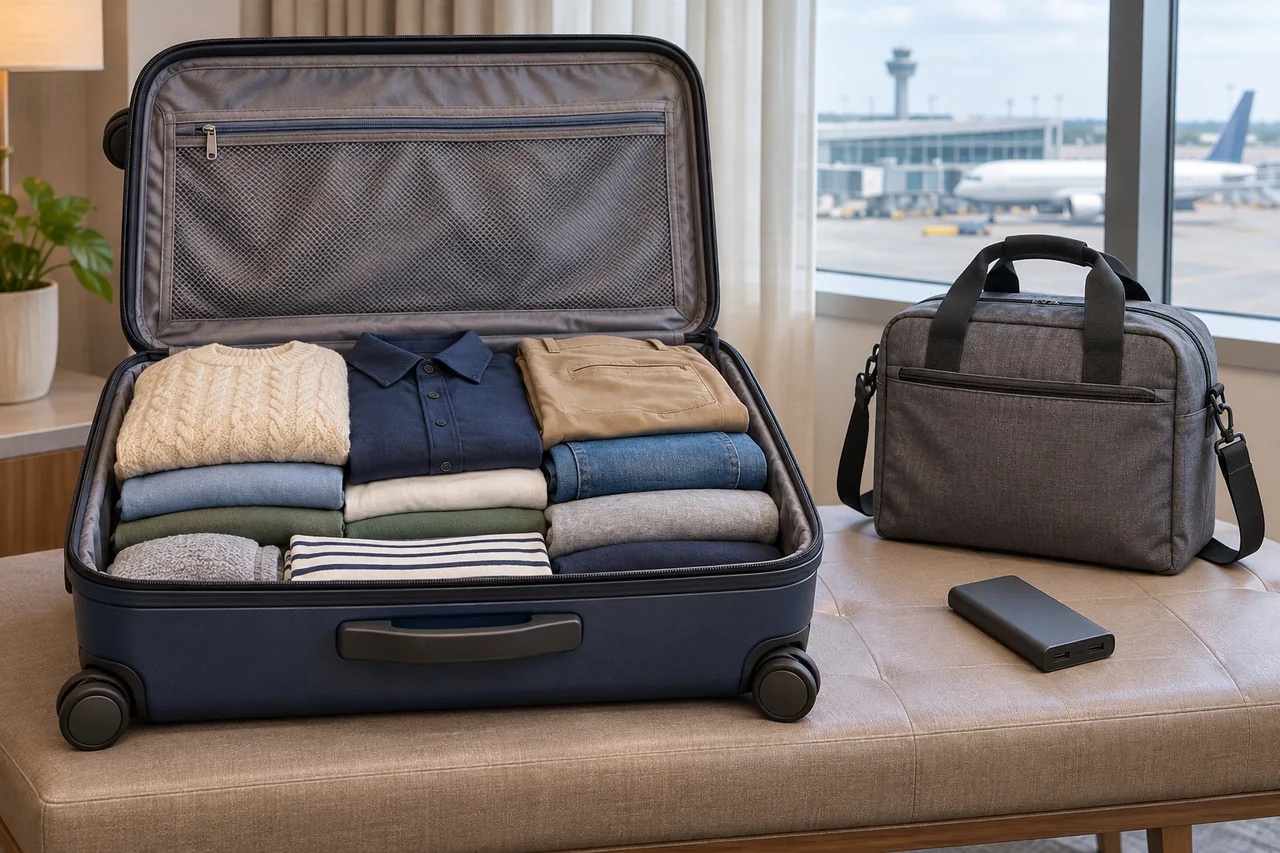
Passengers checking a bag for a flight departing Thailand should remove power banks and spare lithium batteries before handing it over. These belong in cabin baggage, subject to applicable limits. A checked bag may also be opened without its owner present if screening identifies suspicious items; this does not mean every suitcase is opened.
The Civil Aviation Authority of Thailand (CAAT) procedure took effect on 16 October 2026, according to its legal notice. The practical preparation is straightforward: pack within the rules, understand the limits of a luggage lock and know how to follow up if an inspection notice appears inside your bag.
Check the contents before check-in
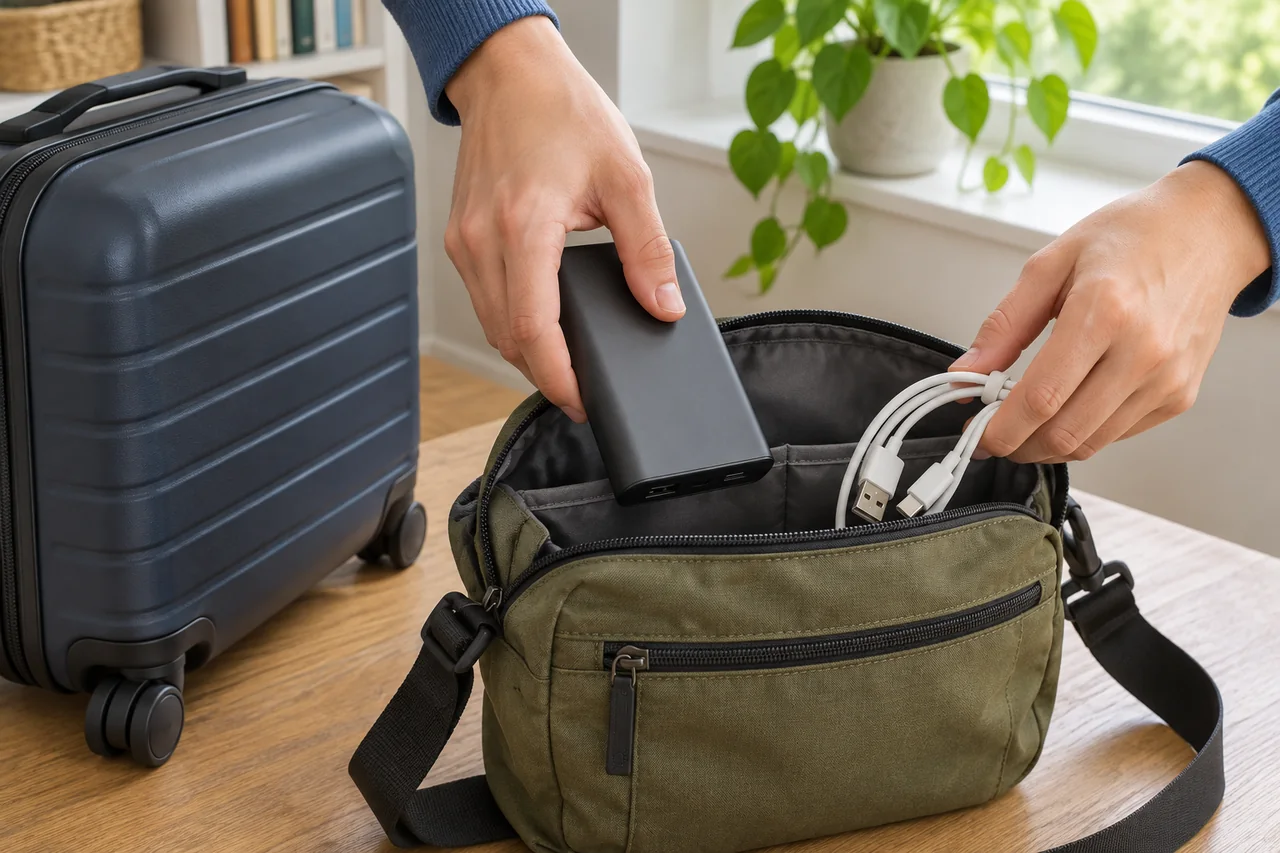
A power bank goes into a cabin bag, subject to applicable limits. AI-generated illustration.
Suvarnabhumi Airport’s passenger guidance says power banks and spare lithium batteries are prohibited in checked baggage. Moving them to a cabin bag is only part of compliance: the applicable capacity, quantity and packing conditions still need checking with your airline.
Check your airline’s current dangerous-goods instructions for cameras, laptops, medical equipment or other battery-powered devices. Rules for a spare battery and a battery installed in a device can differ.
CAAT also advises keeping valuables and important documents out of checked baggage. Before departure, photograph the bag and its contents, as recommended in the authority’s 25 October implementation update. This creates a record for any later query; it does not establish entitlement to compensation.
A lock does not prevent a security inspection
CAAT recommends a TSA-compatible lock. Suvarnabhumi’s guidance warns that a non-TSA lock may be damaged if airport staff need to open the bag.
A compatible lock does not exempt a bag from inspection or guarantee that it will be undamaged.
The boundary of the procedure matters. In its 25 October clarification, CAAT said opening follows suspicious X-ray findings and is not routine for every bag. Its review of four social-media cases identified only one domestic case as using the new procedure. That small review cannot tell passengers how frequently bags are opened or how often damage occurs.
If you find an inspection notice
CAAT’s English passenger guidance says staff can inspect a bag while the passenger is absent. The published procedure calls for video recording and a Notice of Baggage Inspection placed inside the bag.
Keep the notice and check the bag and contents. If something is damaged or missing, contact the airline and follow its baggage-reporting and claims process. Retain your pre-departure photographs and document the condition you found so you can explain the issue clearly. The notice is relevant to that inquiry, but it does not by itself determine liability or promise reimbursement.
If a bag appears to have been opened and there is no notice, raise the circumstances with the airline rather than assuming which authority or airport opened it.
Official sources checked on 20 November 2026.