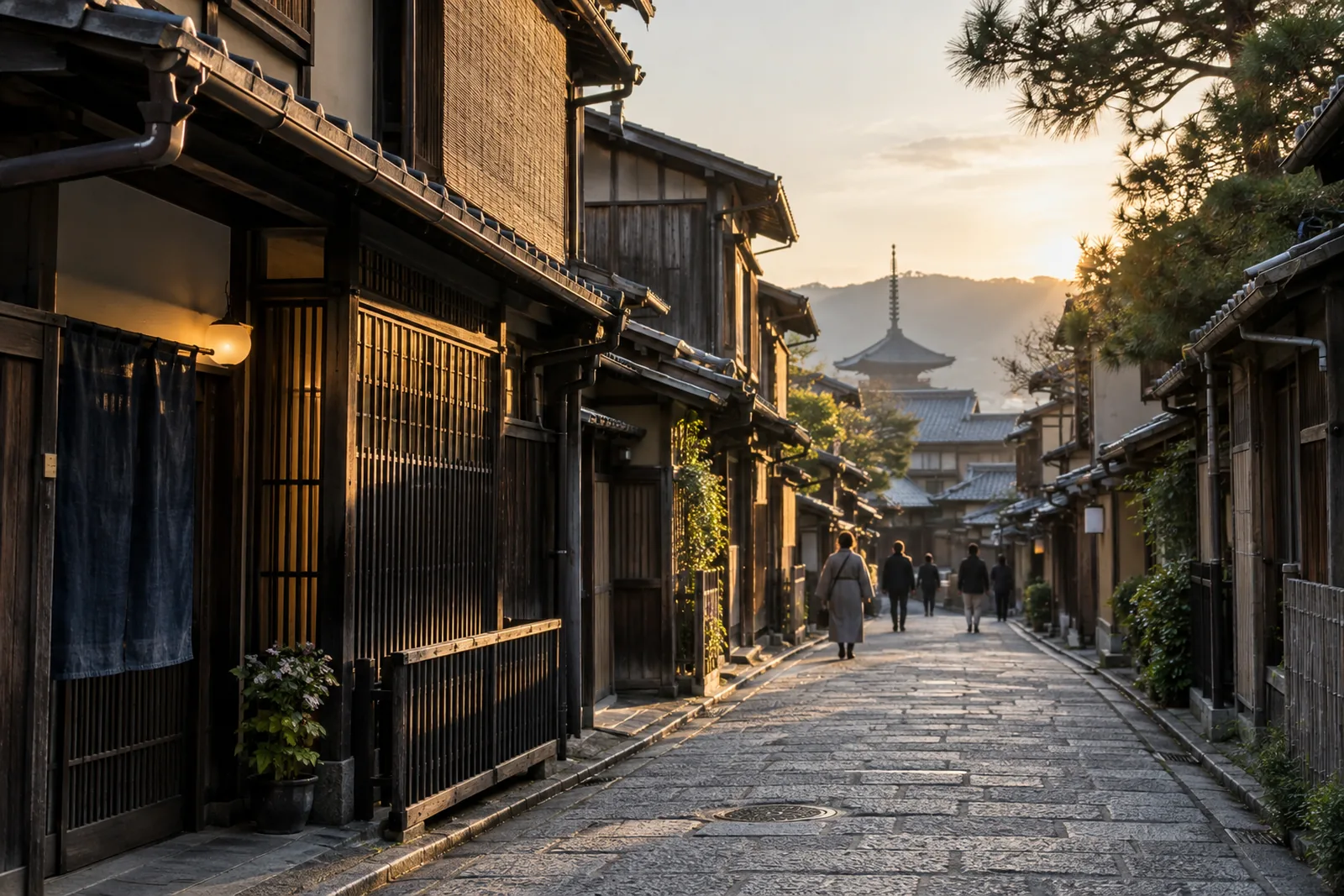
At 7 AM, Kyoto is available but not fully open
Temple grounds and outdoor lanes can feel radically calmer before tour groups and day-trippers arrive. Buses are less compressed and the air is often cooler. The cost is choice: many shops, cafés and indoor attractions have not opened.
This hour rewards walkers, photographers and repeat visitors who do not need every stop to be transactional. It can frustrate families who need breakfast options, indoor breaks or a tightly packed checklist.
At 2 PM, access expands and space contracts
By afternoon, the city offers its fullest range of food, retail and staffed attractions. It also concentrates visitors in the same iconic corridors. The experience becomes easier to provision and harder to improvise.
Japan’s tourism authorities explicitly identify visitor concentration by area and time as a cause of crowding, resident impact and reduced traveler satisfaction. The problem is not that afternoon visitors chose the “wrong” time; it is that demand and capacity peak together.
A split-day strategy works better than a winner
Use early hours for one high-pressure outdoor district. Move to breakfast and a less concentrated neighborhood as the first wave arrives. Reserve the afternoon for timed indoor sites, food, craft or a different city sector instead of staying in the same famous street all day.
The better question is not whether 7 AM beats 2 PM. It is whether your plan uses each hour for what it does best without transferring inconvenience to residents.